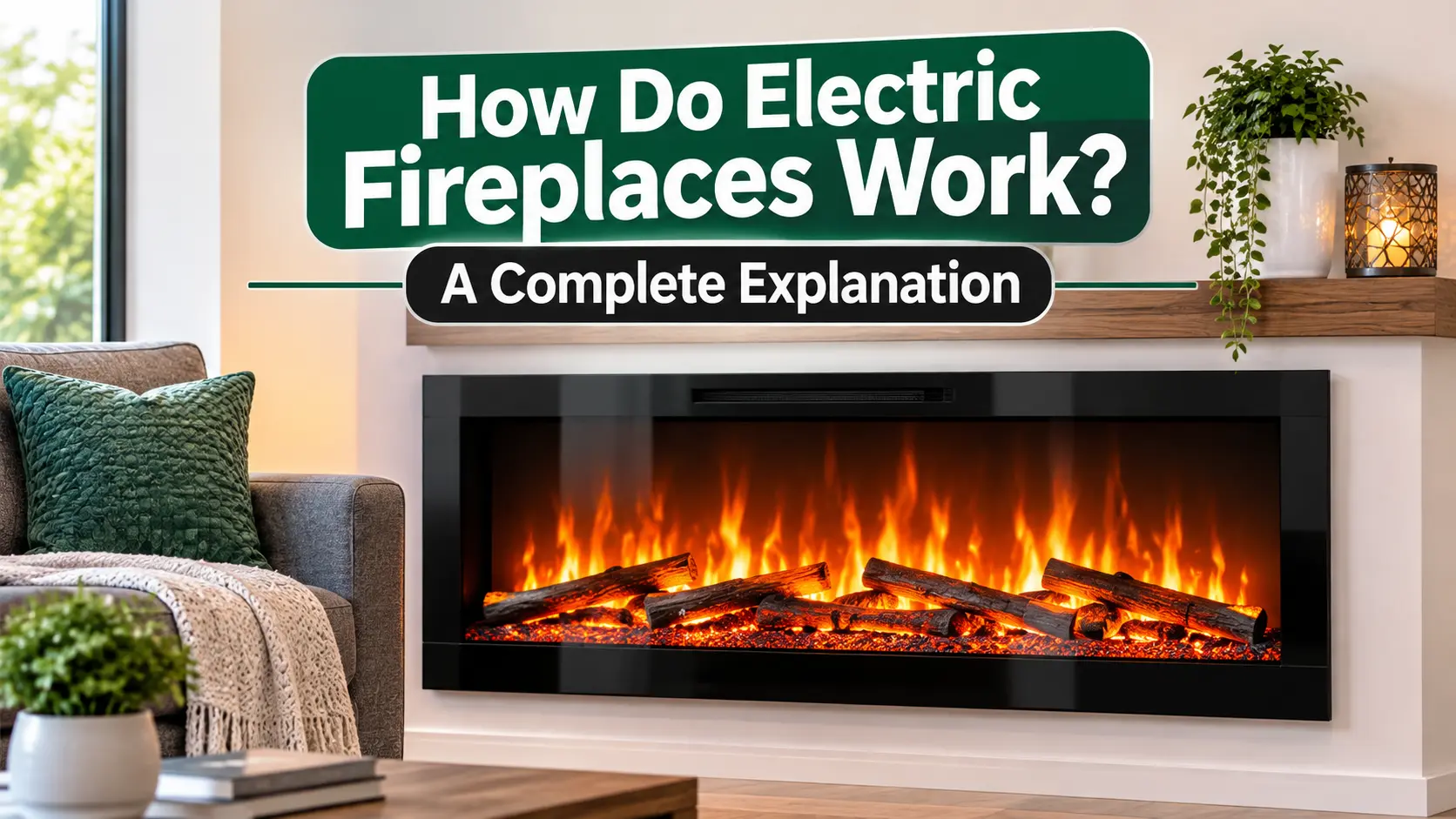
Electric fireplaces use electricity to generate heat and create the appearance of real flames. Unlike traditional fireplaces, they do not burn wood or gas. Instead, an internal heating system warms the room, while a separate flame-effect system uses lighting, reflective components, digital displays, or water vapour to simulate a fire.
Both systems can operate together or independently, depending on the model. Understanding how these components work explains why electric fireplaces can provide warmth without producing real flames, smoke, or combustion gases.
What Is an Electric Fireplace?
An electric fireplace is an electrical heating appliance that provides supplemental warmth while recreating the appearance of a traditional wood, coal, or gas fireplace. Instead of burning fuel, it uses LED lights, digital displays, or other visual technologies to simulate flickering flames.
It operates through two main systems: an internal heating element that generates warmth and a separate flame-effect system that creates the visual display. Many models allow both systems to work independently, so you can enjoy the simulated flames without turning on the heater.
How Do Electric Fireplaces Work Step by Step?
An electric fireplace works by powering its heating and flame-effect components through an internal electrical system. When you switch it on, the control board activates the functions selected through the control panel or remote.
Here is how the process works:
Step 1: Electricity Powers the Fireplace
When you connect the fireplace to an electrical supply and switch it on, electricity reaches its internal control board. This component manages the heating system, flame display, and other available settings.
Depending on the model, you can activate the flame effect, heating function, or both.
Step 2: The Heating Element Generates Heat
When you select a heating setting, electricity passes through an internal heating element. Electrical resistance causes the element to become hot, producing the heat needed to warm the surrounding space.
Some electric fireplaces use metal heating coils, while others use ceramic or infrared heating technology.
Step 3: The Fireplace Distributes Warmth
The way heat reaches the room depends on the heating technology.
In fan-forced models, a blower draws room air through the appliance, moves it across the heated element, and pushes warm air back into the room.
Infrared models work differently. They emit radiant energy that directly warms people and objects within their effective range.
Step 4: The Flame-Effect System Creates Simulated Flames
At the same time, the flame-effect system creates the appearance of a burning fire. Depending on the design, it may use LED lights and reflective components, a digital display, or illuminated water vapour.
These technologies produce the flickering movement and glowing appearance associated with traditional flames, without burning any fuel.
Step 5: Controls Regulate the Fireplace
The control system manages the selected heat and flame settings. Models with a thermostat also monitor room temperature and regulate the heating element to maintain the selected temperature.
Some fireplaces include timers, adjustable flame brightness, remote controls, and separate heat settings. Available features vary by model.
How Do Electric Fireplaces Generate Heat?
Electric fireplaces generate heat by passing electricity through an internal heating element. This converts electrical energy into thermal energy, which warms the surrounding space. Depending on the model, the fireplace may use fan-forced, infrared, or ceramic heating technology to produce and distribute warmth.
Fan-Forced Heating
Fan-forced heating uses an electrical heating element and a blower fan. Electricity heats the element, while the fan draws cooler room air across it. The warmed air then passes through the fireplace’s outlet vents and circulates into the room, providing convection-based heating.
Infrared Heating
Infrared electric fireplaces use radiant energy to warm people and objects directly. The heating element emits infrared radiation, which travels through the air and transfers energy to nearby surfaces. Unlike fan-forced heating, this method does not rely primarily on circulating warm air.
Ceramic Heating
Ceramic heating systems use electrically heated ceramic elements to produce warmth. The ceramic component transfers heat to the surrounding air, often with the help of a blower fan. Ceramic describes the heating element’s material, while fan-forced describes how heat is distributed, so both technologies can work together.
How Do Electric Fireplaces Create Realistic Flames?
Electric fireplaces use lighting, moving components, and digital displays to imitate the flickering appearance of real flames. The technology varies by model, but common systems include LED lighting with rotating reflectors, illuminated water vapour, and digital flame displays.
LED Lights and Reflectors
Many electric fireplaces use LED lights to illuminate a flame-shaped panel or screen. Reflective surfaces help direct the light, creating changing patterns that resemble flickering flames. Some models also illuminate decorative logs, crystals, or ember beds to recreate the glowing appearance of a traditional fire.
Rotating Mirrors
In some models, a small motor rotates a reflective rod or cylinder inside the fireplace. As it turns, it changes how LED light reflects onto the flame screen or back panel. This movement makes the simulated flames appear to dance, flicker, and shift naturally.
LCD Screens and Digital Displays
Advanced electric fireplaces may use LCD or OLED screens to display recorded fire footage or digital flame animations. Some designs combine a screen with angled reflective glass to create the illusion of flames surrounding physical logs, giving the display added depth.
Water Vapour Technology
Water vapour fireplaces use an ultrasonic transducer to convert water into a fine mist. Coloured LED lights shine through the rising mist, creating a three-dimensional flame-like effect. Unlike screen-based displays, this technology produces a visible effect in the air, giving the appearance of moving flames and smoke. Dimplex Optimyst is one example of this technology.
What Are the Main Components of an Electric Fireplace?
An electric fireplace contains several internal components that work together to produce heat and create the flame display. The exact arrangement varies depending on the model and technology.
| Component | Function |
| Heating element | Converts electrical energy into heat |
| Blower fan | Circulates air across the heating element in fan-forced models |
| LED lights | Illuminate the simulated flame and ember effects |
| Reflectors or rotating mechanism | Create movement in certain flame-effect systems |
| Control board | Manages heating, lighting, and user settings |
| Thermostat sensor | Monitors temperature in models with thermostat control |
| Safety cutoff | Helps prevent overheating by interrupting heater operation |
Water vapour models may also contain a water reservoir, ultrasonic transducer, and mist fan. Digital flame models may use a screen instead of a reflective mechanism.
How Much Electricity Does an Electric Fireplace Use?
An electric fireplace’s electricity consumption depends on its wattage, selected heat setting, and operating time. To estimate how much electricity it uses, divide its wattage by 1,000 and multiply the result by the number of hours it operates.
Electricity consumption formula:
Energy(kWh)=Wattage1000Operatinghours
For example, a 1,500-watt electric fireplace running for two hours at full power consumes:
1.52=3kWh
To calculate the cost, multiply the energy consumed by your electricity price per kWh.The actual cost varies according to your electricity tariff, heating settings, and how frequently the thermostat switches the heater on and off.
Need Help With an Electrical Issue in Home?
If you need professional guidance with electrical maintenance, repairs, or recurring electrical issues, speak with the EliteFix team. Share the problem you’re experiencing, and our team can guide you towards the appropriate service for your needs. Contact EliteFix to discuss your electrical concerns or learn more about our electrical services in Dubai.
Frequently Asked Questions
Do electric fireplaces have real flames?
No. Electric fireplaces use LED lighting, reflective components, digital displays, or illuminated water vapour to simulate flames. They do not burn wood, gas, or other fuel.
Do electric fireplaces produce heat?
Yes. Most electric fireplaces with integrated heaters use an electrical heating element to produce warmth. Some distribute heat through a blower fan, while others use infrared technology.
Can you run an electric fireplace without heat?
Yes. Many models offer flame-only mode, which allows the visual display to operate while the heating element remains switched off.
Do electric fireplaces produce carbon monoxide?
No. Electric fireplaces do not produce carbon monoxide through combustion because they do not burn fuel. However, they still need to be installed and operated according to electrical safety instructions.
Can an electric fireplace heat an entire room?
An electric fireplace can provide supplemental heating, but its effectiveness depends on its heating output, room size, insulation, and layout. Check the manufacturer’s recommended room coverage before choosing a model.
Do electric fireplaces use a lot of electricity?
Electricity consumption depends on the fireplace’s wattage and operating time. Heating mode uses more electricity than flame-only mode because the heating element requires additional power.