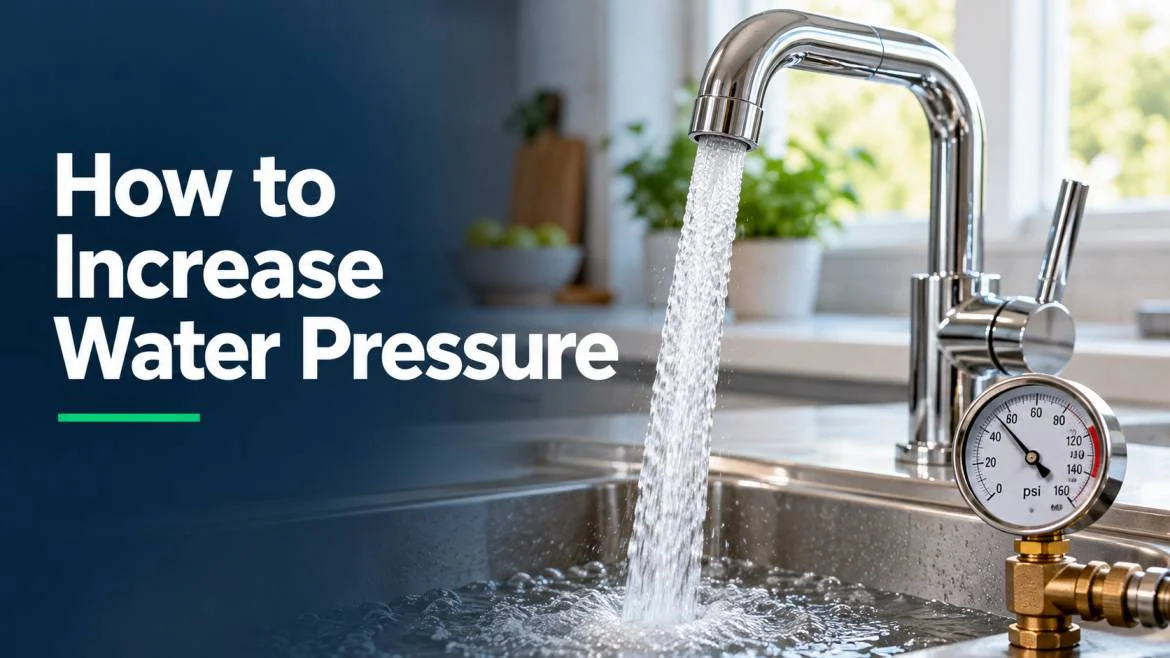
To increase water pressure, first identify whether the problem affects one tap, the hot-water supply or your whole home. Clean blocked aerators and showerheads, check accessible valves, and investigate filters or leaks. If pressure remains low, a regulator adjustment, pipe repair or correctly sized booster pump may help, depending on the cause.
This guide explains what to check first, how to measure pressure and flow, and when to involve a plumber or building management.
Contents
- What should you check first?
- How do you test water pressure?
- Which fixes can improve water pressure?
- What if only hot water is affected?
- When do you need a booster pump?
- Who should you contact?
- Frequently asked questions
How Can You Increase Water Pressure?
Start by checking water valves, cleaning blocked taps and showerheads, and servicing filters. If flow stays weak, check for leaks, regulator faults, or restricted pipes. A booster pump may help if the supply pressure is still too low.
1. Check the Water Valves
Make sure the main household valve and valves serving the affected tap are fully open. On a typical ball valve, the handle lines up with the pipe when open. Do not force stiff valves or adjust utility-owned or shared-building valves.
2. Clean Tap Aerators and Showerheads
Dirt and mineral deposits can block the small screen at a tap’s outlet or the openings in a showerhead.
- Remove the aerator or showerhead following its instructions.
- Rinse away debris and clean gently with a soft brush.
- Use diluted vinegar only if the manufacturer allows it.
- Refit the parts and test the flow.
3. Check the Shower Hose and Valve
Straighten any bends in the shower hose and check that the showerhead is not on a reduced-flow setting. If flow remains weak, a faulty cartridge or mixing valve may need servicing. Isolate the water before internal repairs, or ask a plumber.
4. Check Filters and Water Softeners
A clogged filter can reduce flow to several taps. Check its service date and replace cartridges according to the manufacturer’s instructions. If the problem started after installation or maintenance, have the connections and valve settings checked.
5. Look for Water Leaks
Check under sinks, around toilets, and along visible pipes for drips or damp patches. A higher water bill can also suggest a leak. For a burst pipe, close the household water valve if safe and arrange urgent repairs.
6. Have the Pressure Regulator Checked
A regulator set too low may need adjustment, but it cannot increase pressure beyond the incoming supply. Use a pressure gauge and follow the model’s instructions. If it leaks or does not respond to adjustment, contact a plumber.
7. Check for Restricted Pipes
Corrosion, buildup or undersized pipes can limit flow, especially when several taps run together. EliteFix’s plumbing services can help identify the restriction and recommend suitable repairs. Old pipes do not automatically need replacing.
What Should You Check Before Increasing Water Pressure?
Before changing a regulator or buying a pump, compare several outlets around your home. Check hot and cold water separately, then see whether delivery changes when another tap opens. The location and timing of the problem help narrow down whether the restriction is at a fixture, within your plumbing or outside your property.
| What you notice | What to check first |
| One tap has weak flow | Aerator, local isolation valve and tap cartridge |
| One shower is weak | Showerhead, hose, inlet screen and mixing valve |
| Hot water is weak but cold water is normal | Hot-water valves, heater connections and mixing components |
| Every outlet is weak | Main household valve, filters, regulator and supply system |
| Delivery drops when another tap opens | Restrictions or insufficient capacity during simultaneous use |
| Upstairs outlets are mainly affected | Supply pressure, elevation and pumping arrangement |
| Pressure drops suddenly | Supply interruption, recent plumbing work or a significant leak |
| Several apartments are affected | Shared building supply and pumping equipment |
If the problem began immediately after maintenance, start with the components involved in that work. An isolation valve may not have been fully reopened, or loosened debris may have reached an aerator or filter.
Is Weak Water Flow Always a Pressure Problem?
Water pressure and water flow are different. Pressure is measured in bar or pounds per square inch (psi). Flow is the volume delivered over time, usually measured in litres per minute. A blocked showerhead can reduce flow even when pressure elsewhere in the system is adequate.
This distinction matters because increasing the pressure setting may leave the actual restriction unresolved. If every outlet works normally except one bathroom tap, investigate that tap before changing the whole-home supply.
How Do You Test Your Home’s Water Pressure?
Use a pressure gauge to measure pressure and a container and timer to check flow. Note the outlet tested and whether other taps were running so you can compare results accurately.
Measure Pressure With a Gauge
Use a suitable threaded cold-water tap, such as an outdoor tap.
- Turn off other taps and water-using appliances.
- With the test tap closed, securely attach a compatible gauge.
- Open the tap slowly and record the reading.
- Open another cold-water tap and note any pressure drop.
- Close the test tap before removing the gauge.
The first reading is static pressure. A large drop during use, together with weak flow, may indicate a restriction or limited supply capacity. The test point’s location matters: readings before a pump or regulator may differ from those serving your bathroom.
Check Flow With a Container and Timer
Time how long the affected tap takes to fill a container of known volume.
Flow (litres per minute) = litres collected × 60 ÷ seconds. For example, 5 litres in 30 seconds = 10 litres per minute. Repeat under the same conditions after cleaning or repairs. This measures flow, not pressure.
What Pressure Should Your Home Have?
Check your shower, water heater and pump specifications. The suitable pressure depends on your system, so avoid choosing a setting based only on another home’s readings. For comparison, 1 bar ≈ 14.5 psi.
What If Only Hot Water Pressure Is Low?
If cold water flows normally but hot water is weak, compare several taps. One affected tap suggests a local valve or cartridge restriction; weak hot water everywhere points toward the heater’s supply valve, connections or a shared mixing valve. A failed heating element affects temperature, not necessarily flow, so identify the restriction before replacing the heater.
When Do You Need a Water Pressure Booster Pump?
A booster pump may help when pressure remains too low after fixing blockages, leaks and valve problems. Before installation, a professional should confirm that your water supply can support the pump and choose a model suited to your household’s needs.
- Measure pressure and flow: Check performance when several taps or showers run together.
- Check water availability: Confirm the storage tank and refill rate can meet demand.
- Choose the correct size: Match the pump to required pressure, water use and upper-floor needs.
- Inspect any existing pump: Repair inlet blockages or pump faults before adding equipment.
- Confirm installation requirements: Check pipe limits, electrical supply, noise and maintenance access.
- Check Dubai connection rules: DEWA’s bulk-meter guidelines permit pumps after the storage tank; the installer should confirm requirements for your property.
When Should You Contact a Plumber, Building Management or the Water Supplier?
Contact a plumber when the issue appears confined to your property and basic checks do not resolve it. Shared apartment problems should usually go to building management first. Contact the water supplier when neighbouring properties are affected or an external interruption is suspected.
| Contact | Relevant situations |
| Plumber | Persistent weak delivery, suspected leaks, faulty fixtures, regulators or restricted pipework |
| Pump technician | An existing pump loses pressure, cycles unusually, leaks or fails to run correctly |
| Building management | Several apartments or floors experience the same problem |
| Water supplier | Wider supply disruption or confirmed low pressure entering the property |
Report when the problem started, which outlets are affected, whether hot and cold differ, and any measurements already taken. Mention recent plumbing work or unusual pump behaviour. These details help direct the inspection toward the relevant part of the system.
Still Getting Weak Water Flow in Your Home?
If cleaning fixtures and checking accessible valves have not helped, EliteFix’s plumbing services in Dubai can help investigate the cause. If an existing pump is losing pressure or behaving unusually, arrange a water pump inspection and repair. Share the affected outlets and when the problem started so the team can plan the visit.
FAQs About Increasing Water Pressure
Can You Increase Water Pressure Without a Pump?
Yes, if weak delivery results from a blocked fixture, partially closed valve, restricted filter or faulty regulator. Correcting the cause can restore performance without a pump. Pressure boosting becomes relevant when the available supply pressure remains insufficient after restrictions and equipment faults have been assessed.
Does a High-Pressure Showerhead Increase Water Pressure?
A high-pressure showerhead does not raise the pressure supplied to your home. Its spray design may make the water feel stronger or improve performance at lower available pressure. It will not repair an obstructed supply pipe, faulty mixing valve or building-wide pressure problem.
Why Does Water Pressure Drop When Another Tap Is Turned On?
Opening another tap increases demand through shared pipework. If that supply path has limited capacity or a restriction, pressure at the outlets can fall noticeably. Filters, valves, pipe sizing, available supply and pump performance may all need assessment; the symptom does not identify one cause on its own.
Why Is Water Pressure Still Low After Adjusting the Regulator?
The incoming pressure may already be insufficient, the regulator may be faulty, or a restriction elsewhere may limit delivery. A PRV cannot boost pressure beyond its upstream supply. If adjustment does not help, compare pressure during use and investigate the supply path instead of continuing to tighten the adjuster.