Damp proofing and waterproofing are both important methods of protecting buildings from moisture, yet they are often confused with one another. Whether you are constructing a new property, renovating an existing one, or dealing with moisture problems, understanding these two methods can help you choose the right protection for your building. Although both are used to prevent moisture-related damage, each serves a different purpose depending on the conditions and areas that need protection.
Before comparing the two, let’s understand what damp proofing and waterproofing mean:
Damp Proofing
Damp proofing is a moisture-control treatment applied to building walls, floors, and foundations to block ground moisture and dampness from entering indoor spaces. It resists soil moisture and vapor without hydrostatic water pressure, unlike full waterproofing.
waterproofing
Waterproofing is the process of making a structure, surface, object, or material resistant to water penetration under specified conditions. It prevents leaks, moisture damage, and mold in wet or exposed environments.
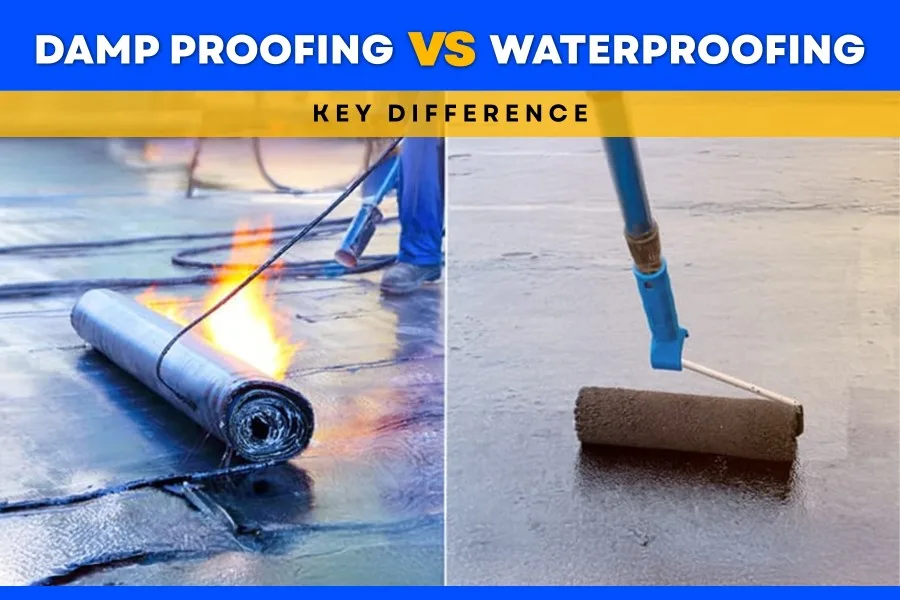
Damp Proofing Vs. Waterproofing: Key Differences
The difference between damp proofing and waterproofing becomes clearer when comparing their key features, applications, materials, and level of protection.
1. Level of Protection
Damp proofing slows or blocks moisture and water vapour from passing through walls and floors. However, it is not built to hold back large amounts of water, so its protection stays limited.
Waterproofing creates a complete barrier that keeps water out of the structure entirely. It works even when water is standing or pushing against the surface, which makes it the stronger and longer-lasting option.
2. Hydrostatic Pressure
Hydrostatic pressure is the force of water pushing against walls and floors, usually from groundwater or heavy rain. Damp proofing cannot stop water that presses against a surface in this way.
Waterproofing is designed to resist this pressure and keep water from forcing its way through. That is why it is the standard choice for basements, cellars and foundations below ground level.
3. Crack Bridging
Damp proofing coatings are thin and rigid, so they cannot bridge cracks once they form. As a result, even a small crack in the wall can let moisture pass straight through.
Waterproofing membranes are flexible, so they stretch or seal over minor cracks as the surface moves. This keeps the protection intact even when the structure settles or shifts slightly over time.
4. Thickness & Materials
Damp proofing is usually a thin coating, often under 10 mils, such as asphalt emulsion or a cementitious coating. It is quick to apply and works well on surfaces with mild moisture.
Waterproofing uses much thicker systems, often 40 mils or more, such as sheet membranes, rubberized or polymer-modified liquids, and bentonite. These materials form a durable layer that handles constant water exposure.
5. Materials Used
Damp proofing relies on simple, low-cost materials such as bituminous paint, asphalt emulsion, cementitious coatings and damp proof membranes. Chemical injection creams and a damp proof course are also common for blocking rising moisture.
Waterproofing uses heavier-duty materials such as sheet membranes, liquid polyurethane, rubberized or polymer-modified coatings, crystalline admixtures and bentonite clay. These products are engineered to stay flexible, bond firmly and resist constant water contact.
6. Areas of Application
Damp proofing is applied to internal and external walls, ground floors, plinths and the lower sections of brickwork. It is also used behind plaster in older homes where moisture slowly rises from the ground.
Waterproofing is applied to roofs, basement walls, foundations, retaining walls, bathrooms, kitchens, balconies, terraces, water tanks and swimming pools. Any area that meets standing water, rain or groundwater needs this stronger protection.
Why is waterproofing important?
Waterproofing protects your property from leaks, moisture penetration, and water damage that can weaken walls, foundations, and roofs. It creates a protective barrier against rainwater and seepage, helping building materials remain in good condition and reducing the risk of costly structural repairs.
It also helps prevent mold growth, peeling paint, and damp smells that affect indoor comfort. Proper waterproofing keeps your home dry, improves durability, and reduces ongoing maintenance needs over time.
Why is dampproofing important?
Damp proofing helps protect your home from ground moisture that can gradually damage walls, floors, and foundations. A damp proofing service can reduce moisture penetration, prevent damp patches, peeling paint, and mold growth, helping maintain a healthier living environment.
It also helps preserve your property’s structural strength by protecting plaster, timber, and other building materials from moisture damage. Timely damp proofing can reduce maintenance costs, improve indoor comfort, and prevent long-term problems.
Which One Is a Better Choice for You?
Choosing between damp proofing and waterproofing depends on the type of moisture your property faces and the level of protection it needs. If you are dealing with ground moisture, damp walls, or rising damp, damp proofing may be sufficient to protect your property. However, areas exposed to heavy rain, water seepage, leaks, or water pressure, such as basements and foundations, may require waterproofing.
Before choosing either solution, identify the source of moisture and the affected area. The right treatment can prevent recurring dampness, protect your building materials, and save you from expensive repairs in the future.
Common Moisture Problems and the Right Treatment
| Moisture Problem | Recommended Solution |
| Rising damp in walls | Damp proofing |
| Moisture coming through foundations | Damp proofing or waterproofing, depending on water pressure |
| Basement water leaks | Waterproofing |
| Roof water seepage | Waterproofing |
| Damp ground floors | Damp proof membrane |
| Water penetration through bathroom walls | Waterproofing |
How to Choose the Best Damp Proofing Material
Choosing the right damp proofing material depends on the source of moisture, the affected area, and the condition of your property. Before selecting a product, consider its durability, moisture resistance, compatibility with building surfaces, and suitability for the type of damp problem. Professional assessment can also help you find an effective solution that protects your property from recurring moisture damage.
Frequently Asked Questions
1. What is the main difference between damp proofing and waterproofing?
Damp proofing prevents moisture from the soil from entering walls and foundations, while waterproofing protects structures against water penetration, including leaks and water pressure.
2. Is damp proofing necessary for every home?
Damp proofing is important for properties exposed to ground moisture or rising damp. It helps protect walls, floors, and foundations from moisture damage and reduces the risk of mold growth.
3. How long does damp proofing last?
The lifespan of damp proofing depends on the materials used, installation quality, and surrounding conditions. A properly installed damp proofing system can provide long-term moisture protection.
4. What are the common signs that a property needs damp proofing?
Common signs include damp patches on walls, peeling paint, flaking plaster, white salt deposits, musty smells, and mold growth, particularly near the bottom of walls.
5. Which material is best for damp proofing?
The best material depends on the source of moisture and the affected surface. Common options include bitumen coatings, damp-proof membranes, and chemical damp-proof treatments. A professional assessment can help identify the most suitable option.